PLYMOUTH & WAREHAM ,After decades of planning, a former cranberry bog is getting a new life

Heavy Equipment Breaks Ground on Landmark Century Bog Restoration Project in Plymouth and Wareham
Work is officially underway to transform a 70-acre retired cranberry farm into a native network of cold-water streams, wetlands, and pine barrens habitat.
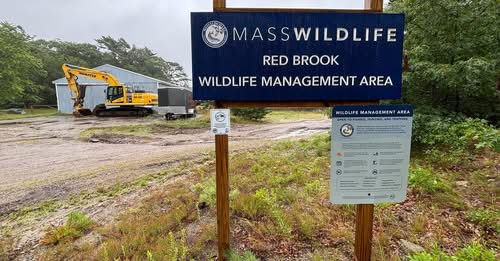
PLYMOUTH & WAREHAM, Mass. — Construction has officially begun on one of the most ambitious ecological restoration projects in Southeastern Massachusetts. Heavy machinery is now on site at Century Bog, erasing more than a century of agricultural modification to reconnect the headwaters of Red Brook with its historical floodplain.
The 70-acre former cranberry farm—which straddles the Plymouth and Wareham town line—is owned by the Massachusetts Division of Fisheries and Wildlife (MassWildlife) as part of the 683-acre Red Brook Wildlife Management Area.State officials call the groundbreaking the final major step in a decades-long effort to heal the entire Red Brook watershed.
┌────────────────────────────────────────────────────────────────────────┐
│                        PROJECT AT A GLANCE                             │
├────────────────────────────────────────────────────────────────────────┤
│ • Location: Plymouth & Wareham, MA (Red Brook WMA)                     │
│ • Wetland Restoration: ~72 acres                                       │
│ • Stream Channel Restored: 12,300 feet of Red Brook                    │
│ • Native Upland Habitat: ~47 acres (Pine Barrens & Sandplain)          │
│ • Total Investment: $4.9M America the Beautiful Challenge Grant +      │
│   state & partner funding                                              │
│ • Key Wildlife: Sea-run brook trout, river herring, American eel,      │
│   frosted elfin butterfly, prairie warbler                             │
└────────────────────────────────────────────────────────────────────────┘
Undoing a Century of Farming Infrastructure
For over 100 years, the land was heavily modified for commercial cranberry harvesting.Streams were straightened, wetlands drained, and water flow strictly controlled using earthen dams, metal flumes, and perimeter drainage ditches.To support crops, growers regularly applied layers of sand over the bog floor, creating dense caps over the site’s natural peat.
Although commercial farming at Century Bog ended in 2015, the landscape remained disconnected from natural groundwater and surface flow.
To restore natural hydrology, restoration teams are:
- Removing Obstructions:Excavating culverts, berms, and water-control flumes to eliminate physical barriers to fish passage.
- Filling Ditches & Reshaping Land:Filling agricultural ditches and re-carving natural meanders into Red Brook’s channel.
- Reconnecting Cold Water:Linking the stream back to natural groundwater springs, using boulders and fallen woody material to create shaded pools and rich aquatic habitat.
Critical Win for Regional Biodiversity
Red Brook is renowned among local conservationists as one of the region’s few remaining habitats for sea-run brook trout (“salters”)—a sea-migrating fish that requires cold, unpolluted freshwater streams for spawning.
Beyond migratory fish like river herring and American eels, state officials estimate the project will benefit at least 56 target species identified in the Massachusetts State Wildlife Action Plan.The surrounding 47 acres of restored upland will expand the Atlantic Coastal Pine Barrens—the largest continuous block of pine barrens habitat north of New Jersey.
“Red Brook is one of the region’s most special places, providing habitat for sea-run brook trout, American eel, river herring and other native species that depend on healthy streams to survive,” said Eve Schluter, MassWildlife acting director.“Over time, wetlands will once again provide clean water, native plants will flourish, fish will move more freely, and Red Brook will continue to become a healthier, more connected ecosystem.”
A Decades-Long Regional Effort
The groundbreaking represents more than 20 years of coordination between state agencies, regional conservation non-profits, and tribal partners.Organizations involved include MassWildlife, Mass Audubon, the Buzzards Bay Coalition, Trout Unlimited, the Massachusetts Division of Ecological Restoration (DER), and the Mashpee Wampanoag Tribe.
When the Southeastern Massachusetts Chapter of Trout Unlimited began advocating for Red Brook in the late 1980s, restoring Century Bog seemed out of reach.
“The idea of restoring the Century Bog to what it once was… was something that we never dared to dream was possible,” said Warren Winders of Trout Unlimited.“Thanks to MassWildlife, that which we never dared to dream is now about to happen.”
Alex Hackman, director of ecological restoration for Mass Audubon, emphasized the broader trend across the South Shore and Cape Cod:
“We have a once-in-a-lifetime opportunity to restore wetlands in Southeastern Massachusetts as unproductive cranberry farms retire. Breaking ground on the Century Bog project is a major milestone.”
What Visitors Should Expect
Visitors to the Red Brook Wildlife Management Area may notice heavy construction equipment, soil staging, and temporary access disruptions while earth-moving is underway. Project organizers emphasize that short-term disruptions will yield long-term benefits, improving regional water quality flowing into Buttermilk Bay, mitigating flood risks, and expanding passive public outdoor space.