INVESTIGATIVE REPORT: The 40-Year Journey to Justice for Tracy Gilpin
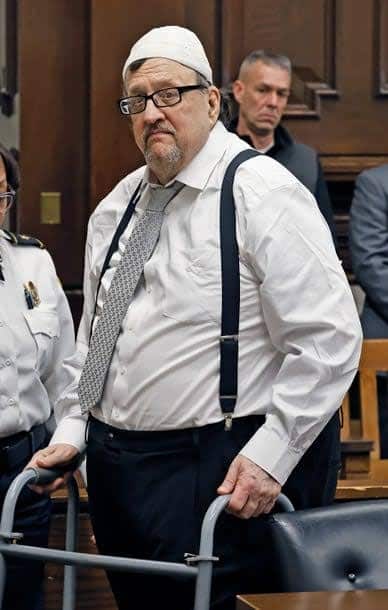
BROCKTON, MA — In March 2026, a Plymouth County jury delivered a historic verdict in one of Southeastern Massachusetts’ most enduring cold cases. After nearly four decades of uncertainty, Michael Hand, 69, was convicted of first-degree murder for the 1986 slaying of 15-year-old Tracy Gilpin of Kingston.
The 12-day trial in Brockton Superior Court revealed a complex legal battle characterized by a total absence of forensic links, heavily contested interrogations, and a decades-old pursuit of closure by the victim’s family.
The Crime and the Decades-Old Cold Case
On October 1, 1986, Tracy Gilpin, a freshman at Silver Lake Regional High School, vanished after leaving a local convenience store to buy cigarettes following a neighborhood party. Three weeks later, on October 22, her partially clothed body was discovered in a shallow grave near the main entrance of Myles Standish State Forest in Plymouth.
An autopsy revealed she had suffered a massive skull fracture. Found resting on her face was the weapon: a 73-pound boulder.
For more than 30 years, the case stymied state and local detectives. A breakthrough didn’t arrive until 2017 and 2018, spurred in part by a renewed investigation initiated around the time Gilpin’s sister, Kerry Gilpin, was appointed Superintendent of the Massachusetts State Police. Investigators uncovered old witness statements establishing that Tracy and several other teenagers had gathered at Michael Hand’s Kingston home on the night she disappeared. Hand was 29 years old at the time.
The Arrest and Legal Groundwork
In March 2018, Massachusetts State Police tracked Hand to North Carolina, where he had relocated. Over several days, investigators subjected him to intense, multi-hour interviews.
Because there were no eyewitnesses and no physical evidence, the state’s grounds for arrest relied almost entirely on what Hand said during these sessions. Hand provided rambling, often contradictory narratives, but ultimately made critical, self-inculpatory admissions:
- He placed himself at the exact crime scene inside Myles Standish State Forest.
- He identified the specific 73-pound boulder from evidence photos presented by police.
- He admitted to picking up the massive rock and dropping it, telling police he “heard a thud” and saw the rock land on Gilpin’s head.
Based on these admissions, a Plymouth County grand jury indicted Hand in May 2018 for first-degree murder, kidnapping, and assault with intent to rape.
The Missing Link: Why Was There No DNA?
One of the most contentious aspects of the 2026 trial was the complete lack of forensic evidence linking Hand to the scene. Defense attorney Craig Tavares continuously hammered on this vulnerability, raising a critical question: If this was a violent, potentially sexual assault, why was there no DNA?
- 1986 Forensic Limitations: When Gilpin’s body was recovered in 1986, DNA profiling was not an active tool in criminal investigations. Evidence collection and preservation standards of the era were vastly different from today.
- Environmental Degradation: The victim’s body remained exposed to the elements in the state forest for 21 days before discovery, severely degrading any potential biological evidence.
- The “Unidentified Male” DNA: Genetic testing performed decades later on Gilpin’s clothing (specifically her jeans and bikini bottoms) did reveal a DNA profile. However, it did not match Michael Hand. The prosecution argued that the material was too degraded to determine when or how it got there, while the defense argued it belonged to the true killer.
Prosecution vs. Defense: The Trial Strategies
The Prosecution’s Case: A Motive of Rejection
Led by Assistant District Attorneys Jennifer Sprague and Shanan Buckingham, the Commonwealth alleged that Hand drove Gilpin into the forest and killed her after she rejected his sexual advances.
With much of Hand’s initial police interrogation heavily restricted or suppressed by pre-trial rulings—courts deemed parts of the 2018 North Carolina interviews coerced due to Hand’s lower-than-average IQ (86) and extreme exhaustion—the prosecution relied heavily on a jailhouse confession.
Wilfred Dumont, a career criminal who shared a cell pod with Hand at the Plymouth County Correctional Facility, testified that Hand confessed the murder to him in detail. Dumont told the jury Hand admitted he forced Gilpin into a car at gunpoint and dropped the boulder on her head because he was “very angry” after she mocked him following an unwanted sexual encounter.
The Defense’s Case: The Coercion and Alternate Suspects
The defense focused heavily on Hand’s cognitive limitations and history of brain injury, arguing that investigators took advantage of his low intelligence to extract a false confession during a “rush to judgment.”
Tavares argued that police ignored other viable leads. Specifically, the defense pointed to Henry Meinholz, a Kingston man who lived in the same neighborhood and was later convicted of the brutal 1990 rape and murder of 13-year-old Melissa Benoit. During his initial interviews, Hand himself attempted to blame Meinholz, claiming he merely watched Meinholz commit the deed. Though investigators ruled Meinholz out based on separate testing, the defense used his profile to argue that a known sexual predator was operating in the exact same radius at the exact same time.
Verdict and Sentence
On March 24, 2026, following a 12-day trial, the jury deliberated for just five and a half hours. They rejected the defense’s theories of coercion and alternative suspects, finding Hand guilty of first-degree murder.
Plymouth Superior Court Judge Katie Cook Rayburn immediately handed down the mandatory sentence: life in prison without the possibility of parole. Hand, now 69 and frail, was ordered to serve his sentence at the Souza-Baranowski Correctional Center, a maximum-security facility in Lancaster, Massachusetts.
Following the verdict, Plymouth County District Attorney Timothy Cruz stated, “The Gilpin family made it their mission to see that justice was done on behalf of Tracy. They never gave up hope.” The defense confirmed they intend to file a formal appeal based on the suppression rulings and the state of the physical evidence.
This broadcast highlights the emotional conclusion of the trial and details the immediate sentencing of Michael Hand following the jury’s swift deliberation.