
A Dark Chapter in Kingston’s History:Remembering The Tragedy of Melissa Benoit

A Dark Chapter in Kingston’s History:Remembering The Tragedy of Melissa Benoit
Local News Desk
Kingston MA-In the annals of South Shore history, few events resonate with the chilling impact of the tragedy that befell Kingston on September 15, 1990. The disappearance of 13-year-old Melissa Benoit remains a somber reminder of a community shaken to its core, leaving an indelible mark on the landscape of Plymouth County that persists decades later.
The narrative of that September Saturday began with a poignant, solitary moment—a visit to a father’s grave—before devolving into an unthinkable nightmare. As the afternoon light faded, the realization that Melissa had not returned home sparked an urgent, desperate search. Within hours, the quiet residential streets of Kingston became the epicenter of a massive, multi-agency investigation. Local detectives, working in tandem with the FBI, methodically canvassed the neighborhood, interviewing residents and administering polygraphs to those along the route Melissa had taken.
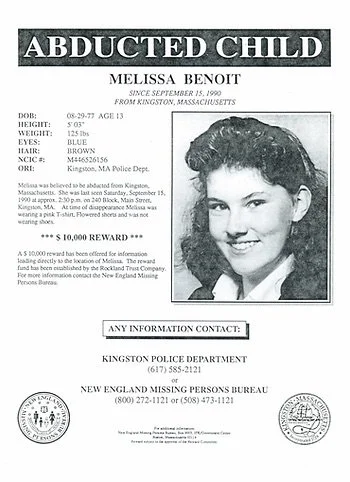
The investigation took a harrowing turn when the focus shifted to a residence mere steps away from the victim’s own home. Henry Meinholz, a 52-year-old deacon and Bible school instructor, initially appeared to be a pillar of the community. However, the facade crumbled when his polygraph results raised immediate red flags. Under intense interrogation, Meinholz admitted to a predatory history, confessing to a pattern of following young girls and harboring violent fantasies.
The subsequent search of his property confirmed the investigators’ worst fears: Melissa’s body was discovered in a shallow, makeshift grave concealed within his basement. Forensic analysis would later confirm the brutality of the act, revealing that she had been restrained, sexually assaulted, and ultimately died of asphyxiation. During the legal proceedings, the defense presented claims that Meinholz acted under the influence of persistent auditory hallucinations, yet these explanations provided little solace to a mourning community and a grieving family.

By 1991, the judicial process reached its conclusion. A judge sentenced Meinholz to life in prison without the possibility of parole, ensuring he would never again walk free. His eventual death behind bars in 2000 brought a finality to his existence, yet the emotional scars left by his actions remain woven into the town’s collective memory.
For those who lived through that autumn of 1990, the case serves as a haunting reflection on the vulnerabilities inherent in our small-town life. It remains a testament to the fact that evil can exist behind the most ordinary of doors. As we revisit these historical files, we are reminded not only of the fragility of safety but of the resilience of a community that was forced to confront the darkest of realities in its own backyard.
For more regional reporting and historical archives from Plymouth County, visit Plimoth Today.