

Plymouth MA,-One of Plymouth’s most recognizable vacant buildings may soon have a new future.
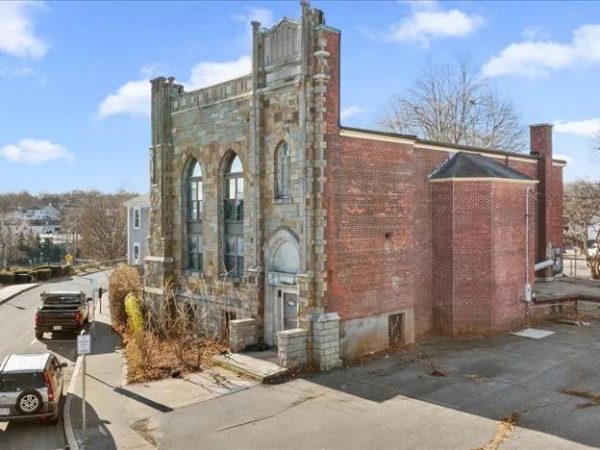
Plans have been submitted to convert the former Salvation Army building on Coles Hill into eight condominium units, bringing residential housing to the historic property that overlooks Plymouth Harbor and Plymouth Rock.
The building, located at 8 Carver Street, was originally built in 1913 as the First Baptist Church of Plymouth before later becoming home to the Salvation Army. The organization operated from the site for decades before moving to its current Long Pond Road location in 2017.
The property was purchased in 2018 by Edward and Ayli Gates, who hoped to transform the building into a wedding and event venue with a restaurant. While the project received local approvals, legal challenges and delays prevented the plans from moving forward.
Now, a new proposal aims to give the building a different purpose.
According to plans filed with the town, the historic structure would be converted into eight condominiums, including seven one-bedroom units and one two-bedroom unit. Several interior changes would be needed to make the project work, including the removal of the church’s former choir balcony and modifications to floor levels inside the building.
Edward Gates said efforts were made to find a buyer interested in keeping the property as a public-use space, such as a museum, business, or event venue, but no suitable buyers were found. The property is now under agreement with a developer, whose identity has not yet been made public.
Because of the building’s historic significance and location within Plymouth’s Historic District, the proposal will require review by the Historic District Commission before any work can begin. An initial presentation is expected to be made to the commission on June 10.
The sale of the property remains dependent on the project receiving the necessary approvals from the town.
If approved, the redevelopment would bring new life to a building that has sat largely unused for years while preserving a piece of Plymouth’s history for future generations.
Donate to Plimoth Today
Help sustain Plimoth & local Plymouth County news. Empower community journalism today!