

Fake Online Stores Target Holiday Shoppers as Scammers Use AI to Create Convincing Websites

WASHINGTON — Consumers are being warned about increasingly sophisticated online shopping scams as criminals use artificial intelligence and imitation websites to trick shoppers into handing over money and personal information.
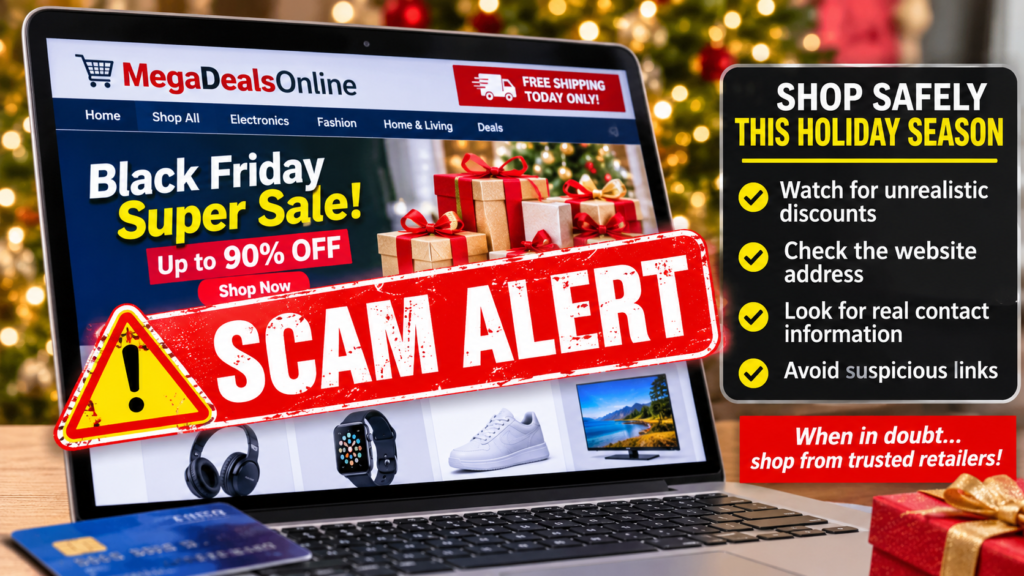
With the holiday shopping season underway, scammers are creating fake online stores that closely resemble legitimate retailers. These websites often feature professional-looking designs, convincing product photographs, customer reviews and advertisements offering heavily discounted merchandise.
But behind the polished appearance, many of these stores are designed to steal credit card information, collect payments for products that never arrive or sell counterfeit merchandise.
AI Makes Fake Shopping Websites Harder to Recognize
Artificial intelligence is making it easier for criminals to build convincing fake storefronts in a short amount of time.
Some fraudulent websites copy the appearance and branding of established retailers, while others create entirely fictional businesses. Fake customer reviews and unrealistic discounts can make these stores appear trustworthy.
Scammers also promote their websites through social media advertisements, online search results and promotional emails.
In some cases, shoppers believe they are purchasing from a legitimate retailer, only to discover that their orders never arrive or that the merchandise is nothing like what was advertised.
Warning Signs of an Online Shopping Scam
Consumers should watch for several warning signs before making an online purchase:
- Unrealistic discounts: Extremely low prices on popular or expensive products can be a warning sign.
- Suspicious website addresses: Fake stores sometimes use web addresses that closely resemble legitimate retailers.
- Missing contact information: Be cautious when a website has no verifiable business address or customer service information.
- Fake customer reviews: Positive reviews displayed on a website are not always genuine.
- Pressure to purchase: Countdown clocks and claims that an offer is about to disappear can be used to rush shoppers into making decisions.
How Consumers Can Protect Themselves
Consumer protection officials recommend researching unfamiliar retailers before making purchases.
Shoppers should visit retailers through their official websites rather than clicking unfamiliar advertisements or promotional links. Checking independent reviews and searching the business name alongside words such as “scam” or “complaint” can also help identify suspicious sellers.
Using a credit card instead of a debit card can provide additional protections when disputing fraudulent transactions.
Consumers who believe they have encountered an online shopping scam can report it to the Federal Trade Commission at ReportFraud.ftc.gov.
As online shopping continues to grow, officials are encouraging consumers to slow down, verify retailers and think twice before entering payment information on unfamiliar websites.
Consumer Reminder: A professional-looking website does not necessarily mean the business behind it is legitimate.
Donate to Plimoth Today
Help sustain Plimoth & local Plymouth County news. Empower community journalism today!