Were the Pilgrims “Tripping” in Plymouth? The Science Behind the Theory
PLYMOUTH, MA — We’ve all seen the paintings: somber men in stiff collars, women in starched aprons, and a general vibe of “we haven’t laughed since 1620.” But a deep dive into the biological reality of 17th-century agriculture suggests that the “Straight-Laced Pilgrim” narrative might be due for a psychedelic rewrite.
Forget the pious prayers for a second; the real story of the Plymouth Colony might involve less “purity” and a lot more “purpurea”—as in Claviceps purpurea, the ergot fungus that turns a standard loaf of rye bread into a one-way ticket to a 17th-century rave.
Breaking Bread (and Reality)
In a recent investigative look into colonial daily life, the evidence points to a recurring, uninvited guest at the dinner table: Ergotism. Because the settlers struggled to grow wheat in the rocky, damp soil of the South Shore, they leaned heavily on rye. In the humid, coastal climate of Plymouth, rye is a magnet for ergot—a fungus that contains lysergic acid, the precursor to LSD.
The Newsroom Take: The Pilgrims weren’t just “founding a nation”; they were potentially micro-dosing their way through the wilderness.
A Day in the Life: Hallucinations or Holiness?
Imagine the typical Tuesday in the colony. You’ve spent twelve hours chopping wood and avoiding dysentery. You sit down for a slice of “black bread” and suddenly, the forest starts whispering in Latin and your neighbor’s hat looks like it’s melting into the Atlantic.
For a deeply religious society, these weren’t “bad trips”—they were spiritual events. The symptoms of convulsive ergotism are a checklist for what the settlers called “The Wonders of the Invisible World”:
- Muscle Spasms: Known to the locals as “the fits.”
- Formication: The sensation of ants crawling under your skin (a classic “tripping” trope).
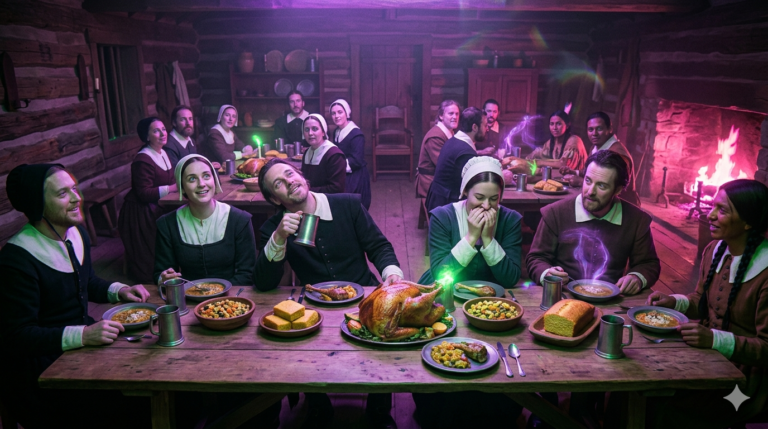
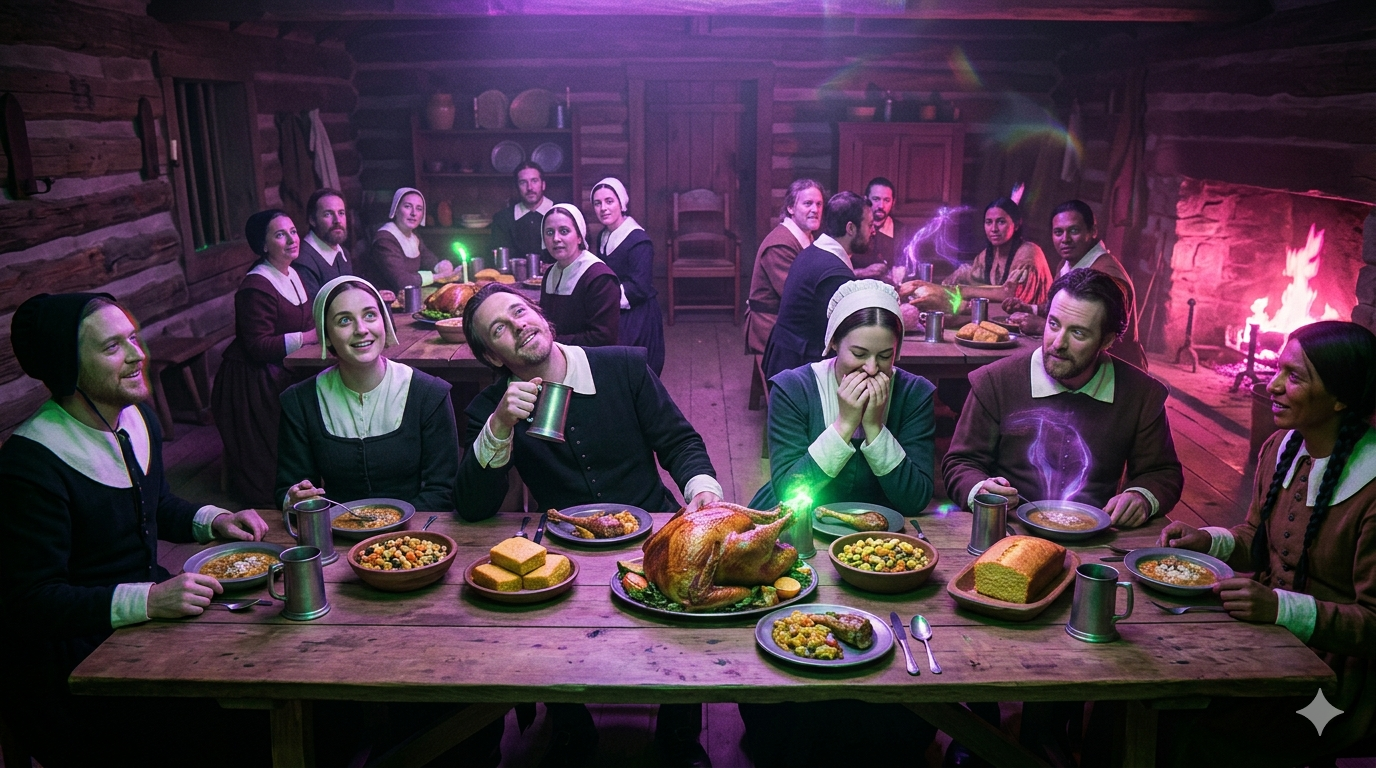
- Vivid Visions: Seeing angels, demons, or neon-colored turkeys in the rafters.
The “Beer and Bread” Diet
To add fuel to the fire, the primary source of hydration in the colony wasn’t the local well water—it was beer. Even the kids were drinking “small beer” because it was safer than the bacteria-ridden streams.
When you combine a constant low-level buzz from the brew with a steady diet of hallucinogenic fungus-bread, the stoic “First Thanksgiving” starts to look less like a formal dinner and more like a proto-Woodstock with better buckles.
The Verdict: The Ultimate Survival Gamble
While we can’t prove the entire colony was high 24/7, the science of the 1600s was a literal gamble. One damp spring followed by a warm summer meant the grain silos were essentially “The Electric Kool-Aid Rye Bread Test.”
So, the next time you see a statue of a stern-faced Pilgrim in downtown Plymouth, look closely at the eyes. They might not be looking at the horizon of a new nation—they might just be watching the colors of the wind.
About the Author